
- 0
- 382 words
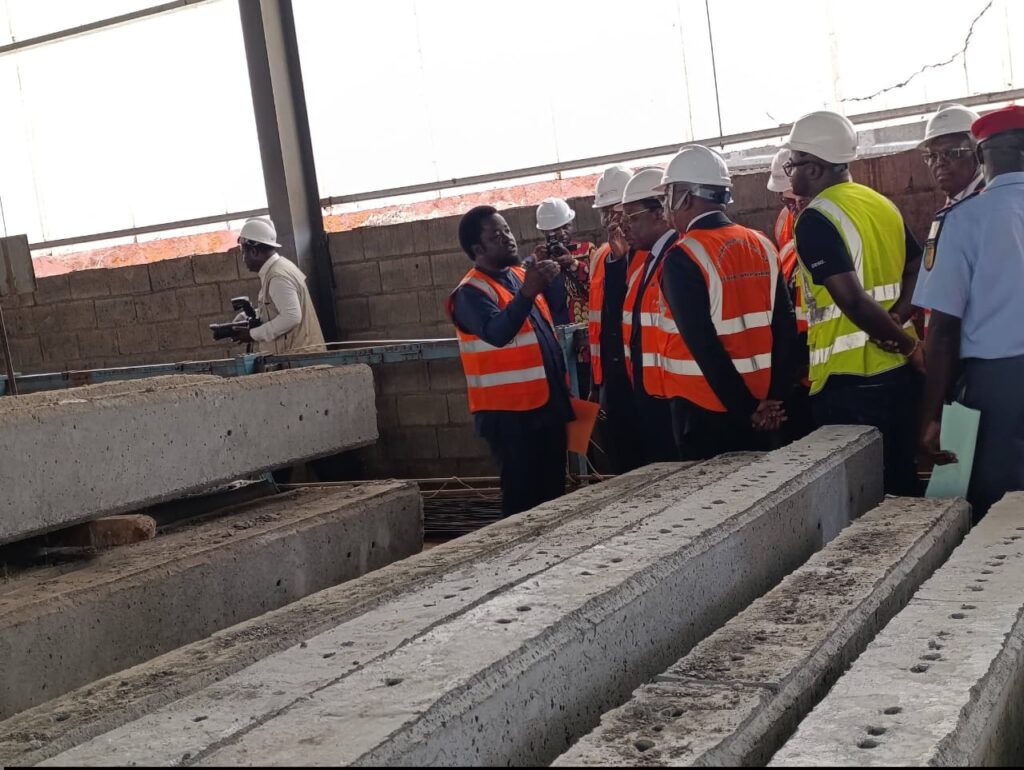
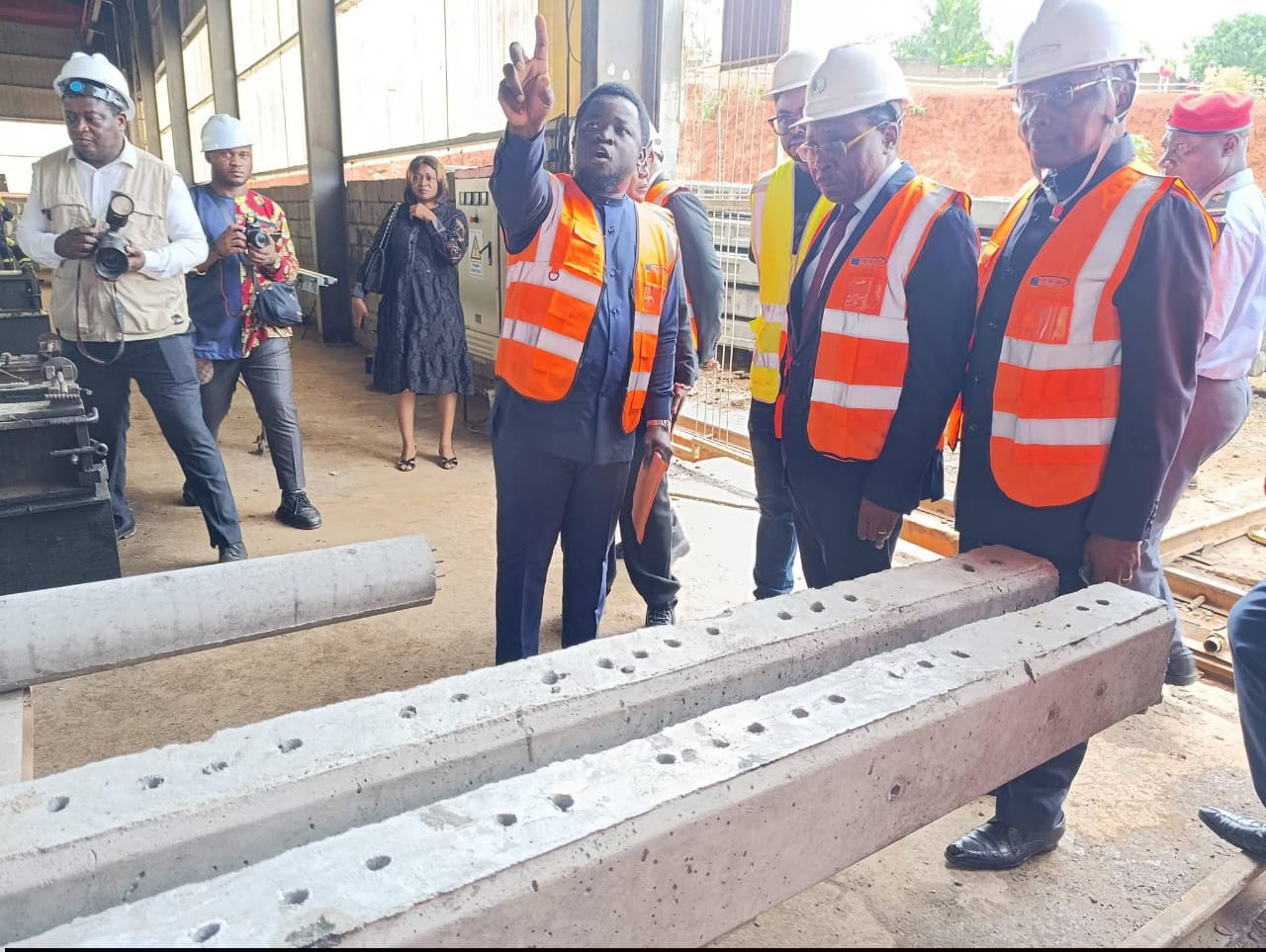
In a decisive move to end the era of rotting wooden poles and chronic outages, Cameroon is accelerating a nationwide switch to concrete. On Friday, May 15, 2026, the Minister of Water and Energy, Gaston Eloundou Essomba, toured the facilities of Cameroon Infrastructures Company 30 S.A. (CIC 30 S.A.) in Nkometou, a company now at the heart of a strategy to rebuild the country’s fragile electricity distribution network.
The Minister was flanked by the Prefect of Lékié, the Sub-prefect and Mayor of Obala, top officials from the newly formed Société Camerounaise d’Électricité (SOCADEL), representatives from the Electricity Sector Regulatory Agency (ARSEL), and local traditional authorities. Their presence underscored the visit’s significance: a signal of structural transformation in national energy policy.The delegation toured the plant’s key spaces, from raw material storage to the vibration and molding production chain, the quality control laboratory, and finished product stockpiles. Company executives detailed the process behind their reinforced and prestressed concrete poles, destined for electrification projects nationwide.
The scale of the challenge was laid bare by the Minister’s own figures. Cameroon’s distribution network relies on nearly 2 million wooden poles. A staggering 40% of them are defective, their decay causing the recurrent collapses that plunge neighborhoods into darkness.
Albert Kouinche, Chairman of CIC 30 S.A., claimed the company has produced over 100,000 poles since 2018. He announced the imminent commissioning of a modernized site in Garoua, while new factories in the North-West and South-West regions are nearly complete. The goal is national coverage to meet the grid’s growing demands.
The visit also unfolded against the backdrop of a seismic shift in the electricity sector. The transformation of the former utility ENEO into SOCADEL was formalized by presidential decree on May 4, 2026. New leadership was installed the next day, with an official handover on May 8 in Douala. SOCADEL’s presence at the Nkometou visit signaled the new company’s blueprint is immediately being put into action.
The shift from wood to concrete is one pillar of the broader « Energy Compact, » a framework designed to accelerate infrastructure modernization and ensure universal access to reliable power. By consolidating partnerships with national industrial players, the Ministry of Water and Energy is building a resilient supply chain capable of supporting current and future electricity producers.
Auteur/autrice

djermigodsgracee@gmail.com
Publications similaires
Société
- 2
- 363 words
Parrainage et appui financier de 150 jeunes à Nkambé. Judith Yah Sunday redonne espoir aux conducteurs de mototaxis À Nkambe, dans le...
Lire la suite
Cameroon Military Opens Its Doors
- 0
- 330 words
The Cameroonian Armed Forces hosted a massive open doors event at Air Base 101 in Yaoundé. Running from Sunday the 17th through...
Lire la suite
Le ministère des Transports sanctionne Yango pour « promotion du transport clandestin »
- 0
- 246 words
Dans un communiqué officiel daté du 15 mai dernier, le ministre des Transports, Jean Ernest Massena Ngalle Bibehe, a infligé une série...
Lire la suite
54th National Unity Day Celebration in Cameroon
- 0
- 282 words
Cameroon celebrated the 54th edition of its National Unity Day this Wednesday. The official parade took place on the iconic 20th May...
Lire la suite
Yaoundé Hosts RISE Africa 2026 Entrepreneurship Forum
- 0
- 279 words
Thé Yaoundé Complex Sports Centre held this Saturday 16th May, the Rise Africa conference. It brought together prominent Cameroonian entrepreneurs including Naomi...
Lire la suite
Ngaoundéré Turns to Traffic Lights in Urban Modernization Push
- 0
- 149 words
The city of Ngaoundéré has reached a new milestone in its drive to modernize, installing its first-ever traffic lights at two key...
Lire la suite